
So, the market’s been a bit wild lately, right? Makes you think about how to keep your retirement money safe. You’ve probably heard about options, and maybe they sound complicated or even a little scary. But honestly, they can be a pretty useful tool, not just for making big bets, but for protecting what you’ve already built up. Think of it like putting a safety net under your investments. This article is going to break down how using options for hedging can help you sleep better at night, even when the stock market is doing its usual unpredictable dance.
Key Takeaways
- Using options for hedging means taking a position to offset potential losses in your main investments, acting like an insurance policy for your portfolio.
- Protective put options are a common way to hedge, giving you the right to sell an asset at a set price, limiting your downside risk.
- Strategies like covered calls can generate income while offering a small amount of protection, but they also cap your potential gains.
- When considering hedging with options, especially in retirement accounts like IRAs, be aware of potential restrictions and focus on lower-risk strategies.
- The cost of hedging with options is a real factor; you need to weigh the expense against the level of protection you desire and your own comfort with market swings.
Understanding Hedging With Options
Defining Portfolio Hedging
So, you’ve built up a retirement portfolio, and it’s looking pretty good. But then the market starts acting a bit shaky, and you get that familiar knot in your stomach. What if things take a nosedive? That’s where hedging comes in. Think of it like buying insurance for your investments. Hedging is basically a way to reduce the risk of losing money if the value of something you own goes down. You do this by taking a contrary position in the market. For example, if you own a bunch of stocks, you might do something that makes money when those stocks lose value. The idea is that any gains from your hedging move can help cancel out some or all of the losses from your main investments. The goal isn’t to make a ton of extra money, but to limit how much you could possibly lose.
The Role of Options in Risk Management
Options are financial tools that give you the right, but not the obligation, to buy or sell an asset at a specific price before a certain date. They can be super useful for managing risk. Imagine you’re worried about your stock portfolio dropping. You could buy a ‘put’ option, which is like a safety net. It lets you sell your stocks at a price you decide on, even if the market price falls way below that. This way, your potential losses are capped. It’s a bit like setting a stop-loss order, but with options, you can often get more control and flexibility. They can also be used to generate a little extra income, which we’ll get into later, but their primary role in this context is protection.
Assessing Your Need for Hedging
Before you jump into hedging, it’s smart to figure out if you actually need it and how much protection you’re looking for. Ask yourself a few questions:
- How much risk can I stomach? Are you okay with seeing your portfolio drop by 10% or 20% without losing sleep, or would a smaller dip make you anxious?
- What’s my outlook on the market? Do you think a downturn is likely, or are you generally optimistic about the long haul?
- What’s my investment timeline? If you’re close to retirement, you might want more protection than someone who’s decades away.
- What’s my current portfolio composition? Some investments are naturally riskier than others.
Hedging isn’t free. It costs money to buy these protective options, and that cost eats into your potential returns. You need to weigh whether the peace of mind and the protection against big losses are worth the expense. It’s a trade-off between potential gains and downside protection.
Key Options Strategies for Hedging
When you’re thinking about protecting your retirement nest egg from market downturns, options can be a pretty useful tool. They’re not just for the super-traders; regular folks can use them to add a layer of defense to their investments. Let’s look at a few common ways people do this.
Utilizing Protective Put Options
Think of a protective put like insurance for your stocks or portfolio. You buy a put option, which gives you the right, but not the obligation, to sell an asset at a specific price (the strike price) before a certain date (the expiration date). If the market drops significantly, your put option becomes more valuable, helping to offset the losses in your actual holdings. This strategy essentially sets a floor on how much you can lose.
Here’s a simple breakdown:
- What it is: Buying a put option on an asset you already own.
- How it works: If the asset’s price falls below the strike price, you can exercise your right to sell it at the higher strike price, limiting your loss.
- The trade-off: You pay a premium for this protection, which reduces your overall potential gains if the market goes up.
Exploring Covered Calls for Income and Protection
A covered call is a bit different. Instead of buying an option to protect yourself, you sell one. You own shares of a stock, and you sell a call option against those shares. This means you’re agreeing to sell your shares at a specific price if the buyer of the call option decides to exercise it. The main benefit here is that you collect the premium from selling the call, which adds a little extra income to your portfolio. This premium can provide a small cushion against minor price drops.
However, there’s a catch. If the stock price shoots up past the strike price, you might miss out on those bigger gains because you’re obligated to sell your shares at the strike price. So, it’s more about generating a bit of income and getting limited downside protection rather than outright insurance against a big crash.
Understanding Risk Reversal Strategies
Risk reversal, sometimes called a collar, is a strategy that combines buying a put option and selling a call option. You might buy a put to protect against a significant drop in price, and then sell a call at a higher strike price. The premium you receive from selling the call can help offset the cost of buying the put. This strategy can be a way to get some downside protection while also limiting the cost of that protection. It’s a balancing act, really. You’re giving up some potential upside in exchange for a more affordable downside hedge.
These strategies are tools, not magic wands. They come with costs and trade-offs. It’s important to understand exactly how they work and what you’re giving up before you put them into action. Don’t just jump in without doing your homework.
Implementing Hedging With Options
So, you’ve decided to put some options to work protecting your retirement nest egg. That’s a smart move, especially when the market feels a bit wobbly. But how do you actually do it? It’s not just about picking a random option; there’s a bit of thought involved. Let’s break down how to get this done.
Choosing the Right Index or ETF for Hedging
First off, you need something to hedge against. For most folks, this means hedging against a broad market downturn. Trying to hedge individual stocks with options can get complicated fast, and honestly, it’s usually not worth the effort unless you’re dealing with a very concentrated position. Instead, think about hedging your entire portfolio’s exposure to the general market. This is where index options or options on broad-based Exchange Traded Funds (ETFs) come in handy. The most common choice is something that tracks the S&P 500, like the SPDR S&P 500 ETF (SPY). Why SPY? Because it’s highly liquid, meaning it’s easy to buy and sell options on it, and it generally moves with the overall stock market. If the whole market takes a dive, SPY usually does too, making it a good proxy for your own portfolio’s risk. You’ll want to pick an ETF or index that closely mirrors the composition of your retirement holdings. If you’re heavily invested in large-cap U.S. stocks, SPY is a solid bet. If your portfolio has a different flavor, you might look at other indexes or ETFs, but keep it simple if you can. The goal is to find a widely traded instrument that reflects the kind of risk you’re trying to avoid. Remember, you might not be able to directly hedge mutual fund holdings with ETFs, so check with your brokerage about what’s allowed. Options can be a valuable tool for managing risk.
Determining the Appropriate Strike Price and Expiration
Okay, you’ve picked your hedging vehicle (let’s stick with SPY for our example). Now, what kind of protection do you need? This comes down to choosing the right strike price and expiration date for your options. Think of the strike price as the level at which your protection kicks in. If you buy a put option with a strike price of, say, $450, it means you have the right to sell SPY at $450, even if the market price drops below that.
- Strike Price: Do you want protection against any drop at all, or just significant declines? A higher strike price (closer to the current market price) offers more protection but costs more. A lower strike price is cheaper but only protects you if the market falls a good bit. For retirement portfolios, people often lean towards slightly out-of-the-money or at-the-money puts to balance cost and protection.
- Expiration Date: This is how long your protection lasts. Options expire, so you need to pick a date that makes sense for your concerns. Are you worried about a short-term market blip over the next month? Or are you concerned about a potential downturn over the next six months or even a year? Longer expirations cost more but provide protection for a longer period. Shorter expirations are cheaper but require you to re-hedge more often.
Here’s a quick look at how strike price affects cost:
| Strike Price | Moneyness | Cost (Hypothetical) | Protection Level |
|---|---|---|---|
| $470 | In-the-Money | $15.00 | High |
| $460 | At-the-Money | $8.00 | Medium |
| $450 | Out-of-the-Money | $3.00 | Low |
Note: These are hypothetical costs and will vary based on market conditions, volatility, and time to expiration.
Calculating the Cost of Protection
Hedging isn’t free. You have to pay for that peace of mind. The cost of your hedge is essentially the premium you pay for the options. For put options, this premium is influenced by several factors:
- Time to Expiration: Longer-dated options are generally more expensive because there’s more time for the underlying asset to move favorably (or unfavorably).
- Implied Volatility: When the market is jumpy and expected to move a lot (high implied volatility), option premiums go up. It’s like insurance companies charging more when they expect more claims.
- Strike Price: As we saw, options closer to the current price (at-the-money or in-the-money) cost more than those further away (out-of-the-money).
- Interest Rates and Dividends: These have a smaller impact but do play a role.
So, how much does it cost? Let’s say you have a $500,000 portfolio and you want to buy put options on SPY with a strike price of $450 expiring in three months. If each option contract controls 100 shares and the premium is $3.00 per share, the cost for one contract would be $300 ($3.00 x 100). If you need to hedge the equivalent of $500,000, and SPY is trading around $460, you might need to buy several contracts. Let’s say you decide to hedge 50% of your portfolio’s value, which is $250,000. If SPY is trading at $460, that’s roughly 543 shares ($250,000 / $460). Since each contract covers 100 shares, you’d need about 6 contracts (rounding up). The total cost would then be around $1,800 ($300 per contract x 6 contracts). This $1,800 is the price you pay for that specific level of downside protection for three months. It’s important to weigh this cost against the potential losses you’re trying to avoid. Hedging and protective strategies generally involve additional costs.
You need to figure out what level of risk you’re comfortable with and how much you’re willing to spend to reduce that risk. There’s no one-size-fits-all answer here. It’s a trade-off between cost and the amount of protection you get. Sometimes, a smaller, cheaper hedge is better than no hedge at all, especially if it helps you sleep at night.
Evaluating the Effectiveness of Your Hedge
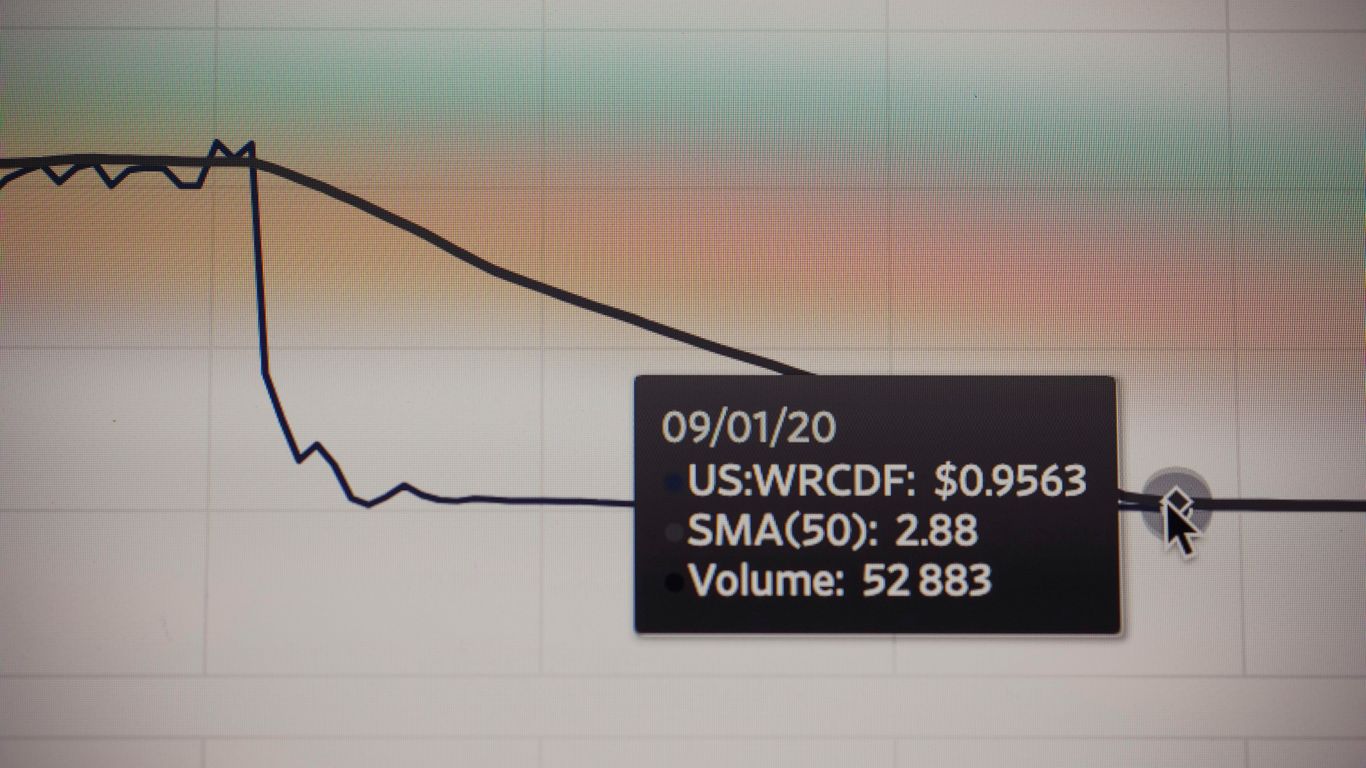
So, you’ve put a hedge in place. That’s great! But how do you know if it’s actually doing its job? It’s not enough to just buy some options and hope for the best. You need to check if your protection is working like it’s supposed to, especially when the market decides to take a nosedive.
Measuring Portfolio Value During Market Declines
When the stock market gets shaky, your hedged portfolio should ideally hold up better than one without any protection. Think of it like this: if your stocks are dropping, your put options should be gaining value, helping to cancel out some of those losses. It’s about seeing how much of your portfolio’s value is preserved. For instance, if the market drops 10%, an effective hedge might mean your portfolio only loses 3% or 4%, instead of the full 10%. This difference is the hedge in action.
Comparing Hedged vs. Unhedged Portfolio Performance
This is where you really see the rubber meet the road. You’ll want to look at how your portfolio performed with the hedge compared to how it would have performed without it. Sometimes, even with a hedge, you might see a smaller loss than expected. Other times, if the market goes up, your hedged portfolio might lag behind an unhedged one because you paid a premium for that protection. It’s a trade-off.
Here’s a simplified look at what that might mean:
| Market Movement | Unhedged Portfolio Value | Hedged Portfolio Value | Hedge Cost | Difference |
|---|---|---|---|---|
| -5% | $950,000 | $932,000 | $20,000 | $18,000 loss reduction |
| -10% | $900,000 | $942,000 | $20,000 | $42,000 gain relative to unhedged |
| +5% | $1,050,000 | $1,030,000 | $20,000 | $20,000 underperformance |
Note: This table is a simplified example. Actual results will vary.
Assessing the Cost-Benefit Analysis of Hedging
Paying for protection isn’t free. You spent money on those options, and that cost eats into your potential gains if the market doesn’t drop. So, you have to ask: was the cost of the hedge worth the protection it provided? If the market stayed flat or went up, you paid for peace of mind that you didn’t end up needing. If the market tanked, you can look at how much you saved compared to being unprotected. Ultimately, the decision to hedge, and how much to hedge, comes down to your personal comfort level with risk and your outlook on the market. It’s a personal calculation, not a one-size-fits-all answer. You might find that using index LEAPS offers a more cost-effective way to hedge over longer periods.
Sometimes, the biggest benefit of a hedge isn’t just the money it saves, but the sleep it buys you. Knowing you have a safety net, even if it costs a bit, can make a big difference in how you feel about your investments during turbulent times. It’s about managing not just your money, but your own reactions to market swings.
Considerations for Retirement Accounts
When you’re thinking about using options to hedge your retirement portfolio, it’s super important to remember that retirement accounts, like IRAs and 401(k)s, often come with their own set of rules. These aren’t your typical brokerage accounts, so what you can do might be a bit more limited.
Restrictions on Options Trading in Retirement Accounts
Most brokers will let you do some basic options stuff in retirement accounts, but they tend to put the brakes on anything that seems too risky. This usually means you can’t trade on margin, which is a big deal for strategies that involve selling options without owning the underlying asset (like naked calls or puts). The idea is to protect you from potentially huge losses, which makes sense when you’re trying to preserve retirement funds. You’ll likely need to get special approval from your brokerage firm, and they’ll probably ask you some questions to make sure you know what you’re getting into. They’ll then assign you a trading level that dictates what you can and can’t do.
Low-Risk Strategies Suitable for IRAs
Don’t let the restrictions get you down, though. There are still some solid, lower-risk options strategies that can work well within retirement accounts. Covered calls are a popular choice. You own the stock, and you sell a call option against it. This can generate some extra income for your portfolio. Another one is the cash-secured put. Here, you sell a put option and set aside enough cash to buy the stock if the option is exercised. This can be a way to get paid while waiting to potentially buy a stock at a lower price. These strategies are generally seen as less risky because you either already own the underlying asset or have the cash ready to buy it, limiting your downside. It’s a good way to add a bit of income or protection without taking on too much extra risk, especially when you’re looking at long-term retirement goals.
The Time Commitment for Active Options Trading
Okay, so let’s talk about time. Options trading isn’t exactly a ‘set it and forget it’ kind of thing, especially if you’re actively managing a hedge. It requires a decent amount of attention. You need to stay on top of market movements, understand how your options are performing, and be ready to adjust your positions if needed. If you’re someone who prefers a hands-off approach to your investments and doesn’t want to spend a lot of time glued to a screen, active options trading might not be for you. It’s more involved than just buying and holding stocks or ETFs. You’ll need to dedicate time to research, execution, and ongoing management. If you’re not prepared for that time investment, it might be better to stick to simpler strategies or work with a financial advisor who can handle the options for you.
Options trading requires a certain level of knowledge and ongoing effort. Before jumping in, honestly assess how much time you can realistically commit to learning, managing trades, and staying informed about market changes. Your retirement savings are too important to treat this casually.
Advanced Hedging Techniques

Leveraging Long-Term Equity Anticipation Securities (LEAPS)
When you’re thinking about protecting your retirement portfolio over a longer stretch, standard options might not cut it. That’s where LEAPS come in. These are basically options contracts, but with expiration dates that are way out – think more than a year, sometimes even two or three. They give you that downside protection for a much longer period without you having to constantly buy new options as the old ones expire. It’s like buying a long-term insurance policy for your investments. If you’re worried about a big market downturn happening sometime in the next few years, LEAPS can offer some peace of mind. The cost upfront is higher than for short-term options, naturally, but you avoid the hassle and potential extra costs of repeatedly rolling over shorter-term hedges.
Employing Put Spreads for Cost-Effective Hedging
Buying a plain old put option can get expensive, especially if you want to protect a large chunk of your portfolio. A put spread is a way to make that protection a bit more affordable. The most common type for hedging is a bear put spread. Here’s how it works: you buy a put option at a certain strike price, and then you sell another put option with the same expiration date but at a lower strike price. This second sale helps offset some of the cost of the first purchase. The trade-off? Your potential profit from the hedge is capped, and so is the amount of protection you get. It’s a good strategy when you expect a moderate decline, not a total market collapse, and you want to keep the cost down.
Here’s a simple breakdown:
- Buy a Put Option: This gives you the right to sell at a higher price.
- Sell a Put Option: This is at a lower strike price, and it brings in some cash to reduce your overall cost.
- Net Cost: The difference between what you paid for the first option and what you received for the second.
The Option Wheel Strategy
The option wheel isn’t strictly a hedging strategy in the traditional sense, but it can be used to generate income and potentially limit losses in a sideways or slightly declining market. It involves two main parts:
- Selling Cash-Secured Puts: You sell put options on a stock you wouldn’t mind owning, and you set aside enough cash to buy the shares if the option is exercised. If the stock price stays above the strike price, the option expires worthless, and you keep the premium. If the price drops below, you buy the shares at the strike price.
- Selling Covered Calls: If you end up owning the shares (from the put option being exercised), you then sell call options against those shares. You collect premiums, and if the stock price rises above the strike price, the shares are sold. If not, you keep the shares and can sell more calls.
This strategy is more about income generation and disciplined stock acquisition than outright protection against a sharp market drop. It works best when you have a long-term view on certain stocks and are comfortable holding them through some price fluctuations. It requires careful selection of underlying assets and strike prices to align with your risk tolerance and investment goals.
It’s important to remember that all options strategies carry risks. Before diving into LEAPS, put spreads, or the option wheel, make sure you understand how they work and if they fit your personal retirement plan and risk comfort level. Talking to a financial advisor who understands options can be a really good idea.
Ready to move beyond the basics? Our "Advanced Hedging Techniques" section dives deep into smart ways to protect your investments. We break down complex ideas into simple steps, making it easy to understand how to manage risk like a pro. Want to see how these methods can boost your trading game? Visit our website today to learn more and start building a stronger portfolio!
Wrapping It Up
So, we’ve looked at how options can act like a safety net for your retirement savings. It’s not exactly like buying insurance, but it can help cushion the blow if the market takes a dive. Remember, though, these strategies aren’t free – there’s a cost involved, and you need to figure out if that cost makes sense for you. Plus, options trading takes some learning and time. It’s not for everyone, especially if you prefer a hands-off approach. But if you’re willing to put in the effort, understanding options could give you more control over your retirement nest egg. Always chat with a financial pro before making any big moves, though.
Frequently Asked Questions
What exactly is hedging in investing?
Hedging is like buying insurance for your investments. It’s a way to protect yourself from losing too much money if the market takes a bad turn. You do this by making a move that profits if your main investment loses value, helping to cancel out some of the loss.
How do options help with hedging?
Options are special contracts that give you the right, but not the obligation, to buy or sell something at a set price. You can use them to create a safety net. For example, buying a ‘put’ option can protect you if the price of your stock or investment goes down, because it lets you sell it at a higher price than the current market.
Is hedging with options expensive?
It can cost money to hedge, like paying for insurance. You usually pay a fee called a ‘premium’ for options. The more protection you want or the riskier the market seems, the more that premium might cost. You have to decide if the cost is worth the peace of mind and protection it offers.
Can I use options to hedge my retirement account, like an IRA?
Retirement accounts can have rules about trading options. Many brokers allow simpler, less risky strategies like selling ‘covered calls’ or buying ‘cash-secured puts’ in an IRA. However, riskier strategies that could lead to big losses might be restricted.
Do I need to be an expert to hedge with options?
Hedging with options is considered an advanced strategy. It’s best if you already understand how options work and have some experience. If you’re new to investing or options, it’s a good idea to learn more first or talk to a financial advisor before trying to hedge your portfolio.
What’s the ‘Option Wheel’ strategy?
The Option Wheel is a way to use options to potentially earn income and buy stocks at a lower price. You start by selling a put option, hoping to buy a stock cheaper. If you end up buying the stock, you then sell a covered call against it. It’s a cycle of selling puts and covered calls to keep earning.